

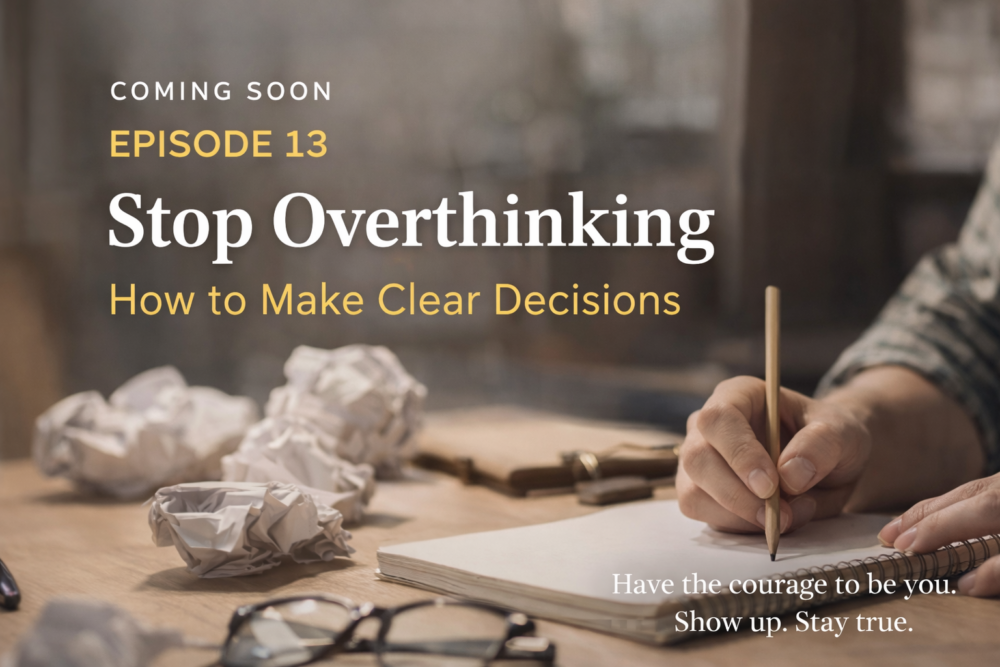
There comes a point where you are no longer lacking information, yet decisions still feel difficult. You can see the options, you understand the direction, and still something holds you back. This is often misunderstood as a need for more clarity or better thinking. In reality, the difficulty is not in the decision itself. It is in what is happening internally.
Why Overthinking Is Not a Thinking Problem
Overthinking is often misunderstood as a lack of clarity. Most people assume that if they think more, analyse further, or gather more information, the right decision will become obvious. In reality, overthinking is not a thinking problem. It is a sign of internal misalignment.
Within the BEMA Methodology™, your Body, Emotions, and Mind work together. When they are aligned, decisions feel clear and direct. When they are not, one dimension compensates for the others, usually the mind. This is where overthinking begins.
You may already feel something in your body, such as tension or hesitation. Your emotions may be signalling that something does not sit right. Instead of recognising these signals, the mind takes over and tries to resolve the conflict through analysis. This does not lead to clarity. It leads to delay.
Clarity does not come from thinking harder. It comes from recognising when your internal system is no longer in conflict. When your body is settled, your emotions are steady, and your mind can articulate what is already known, the decision becomes clear. You are not creating it. You are recognising it.
Why Clarity Feels Difficult Even When You Know
Clarity is often mistaken for certainty. Many people expect decisions to feel comfortable before they act. In practice, clarity often appears before comfort. You may already know what needs to be done, yet hesitation remains.
This happens when one dimension is not aligned with the others. The mind may recognise the direction, while the emotional response introduces fear, or the body signals resistance. This creates a gap between knowing and acting. At this point, most people return to analysis in an attempt to remove discomfort. However, more thinking does not resolve misalignment. It prolongs it.
When You Are Aligned, Decisions Become Clear
When your Body, Emotions, and Mind are aligned, decision-making changes. There is no internal negotiation. The body is not resisting, the emotional response is acknowledged, and the mind is no longer compensating. The decision does not need to be forced. It becomes clear.
This does not mean the decision feels easy. It means it is clear enough to act on. There may still be fear, but there is no confusion. This distinction is important because many people wait for comfort before moving forward, when in reality clarity is already present.
From Internal Clarity to External Direction
Clear decisions shape everything that follows. When you are aligned, your direction becomes precise. That direction defines your goals, your audience, and your message. If your message feels scattered, it is not a communication problem. It is a sign of misalignment.
For leaders building a business or a visible platform, this becomes critical. Visibility is not about being seen. It is about communicating with clarity and integrity. When you are aligned, you are not trying to reach everyone. You are speaking directly to the right audience.
Listen to the Full Episode
This article introduces the core idea. In this week’s episode of Unbox The Podcast, I explain how to recognise alignment in real time, why we return to overthinking, and how to act on decisions without forcing clarity.
Listen to the full episode here:
Work With Me
If you are facing a decision that feels unclear, the Strategic Clarity Session™ helps you understand what is happening internally so you can move forward with clarity.
If your decisions are affecting your visibility, positioning, or platform, the Strategic Brand Clarity Session™ focuses on aligning your identity, message, and audience so your communication becomes clear and consistent. Visit SaharHuneidi.com for more information and resources.